Looking to get an air compressor to run air tools off of. I don't have much experience with them other than running finish nail guns for woodworkinf. I have no idea what brands to stay away from and such. My requirements are semi portable (wheels), 110 v (rental house that I can't modify wiring), around $400-500, and have more long term dependability than the HF ones. Lemme know your opinions. Thanks in advance.
It makes a big difference what air tools you will be running. My framing nail gun will let me run it off anything as long as I don't bump nail the whole capacity. A die grinder, sander or saw will run me out of air very quickly. Impacts work better than air ratchets with smaller compressors... mostly because they spin much faster.
If your using a lot of heavy air use tools for extended times... a cast iron compressor with an oil sump is best... and change the oil as directed. If its occasional use, low demand tools or small paint projects the oil free compressors are less hassle.
I am very hard on electric tools and have found, IMO, that there is very little difference between a cheap model and a midrange model if your going to work the crap out of it. Top line stuff is often better... but 10x the price. Air tools are different, the top line stuff can be rebuilt... I have a snap on air chisel that gets rebuilt about once a decade and comes back upgraded into the latest model every time and hits hard enough to take the rivets off a P/U frame quick.
Compressors are like that too... a home user is unlikely to get a big Ingersoll or Gilbarco $9k compressor... I tend to buy the biggest/cheapest portable I can find... for 110v sounds closer to your needs. The latest is a HF cast iron cylinder/oil sump model that goes for $150 on sale regularly... and I'm happy with it so far, but haven't given it the true acid test. I Bought all my older oil less ones used for around $100 after making sure they could recover the tank quickly... as they wear out they will struggle for that last 10-20 psi. Portable has a lot of flexibility when you work from a 2 car and might do stuff away from the garage.
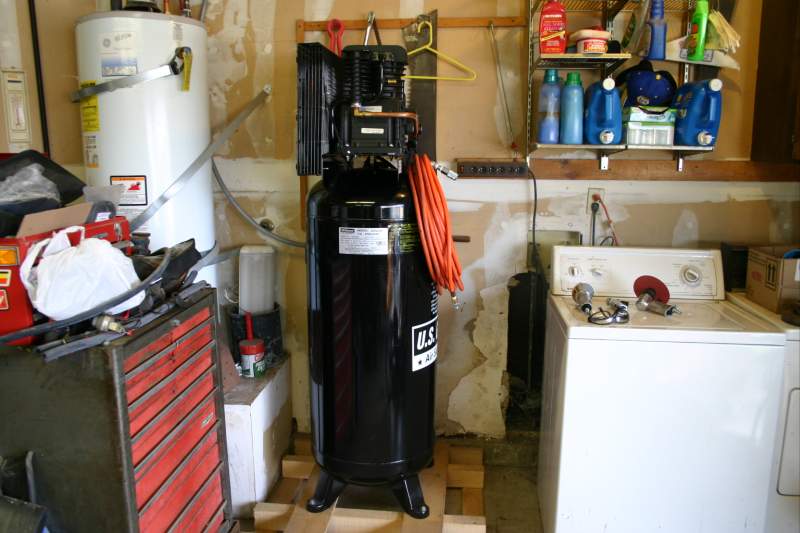
If I ever get a bigger workshop, I would get a bigger 220v model. This is something I learned from Gilbarco many years ago... we had a shop model develop a stress crack on the tank. The new compressor came with a separate kit to isolate vibrations. Basically Leave your big tank model bolted to the pallet, if your not ready to permanently install it. the Gilbarco kit was pieces of 6X6 square tubing cut on an angle so we could bolt the square to the floor and the compressor to the square. They said that was enough to isolate vibrations... and it even dampened the noise a little. I have done , in a pinch, shop compressor installs with 6x6 blocks of wood. Not PT so it doesn't cause corrosion, we bored the wood to use shielded lags to attach the block to the pad, and a big lag to attach each leg to the block.