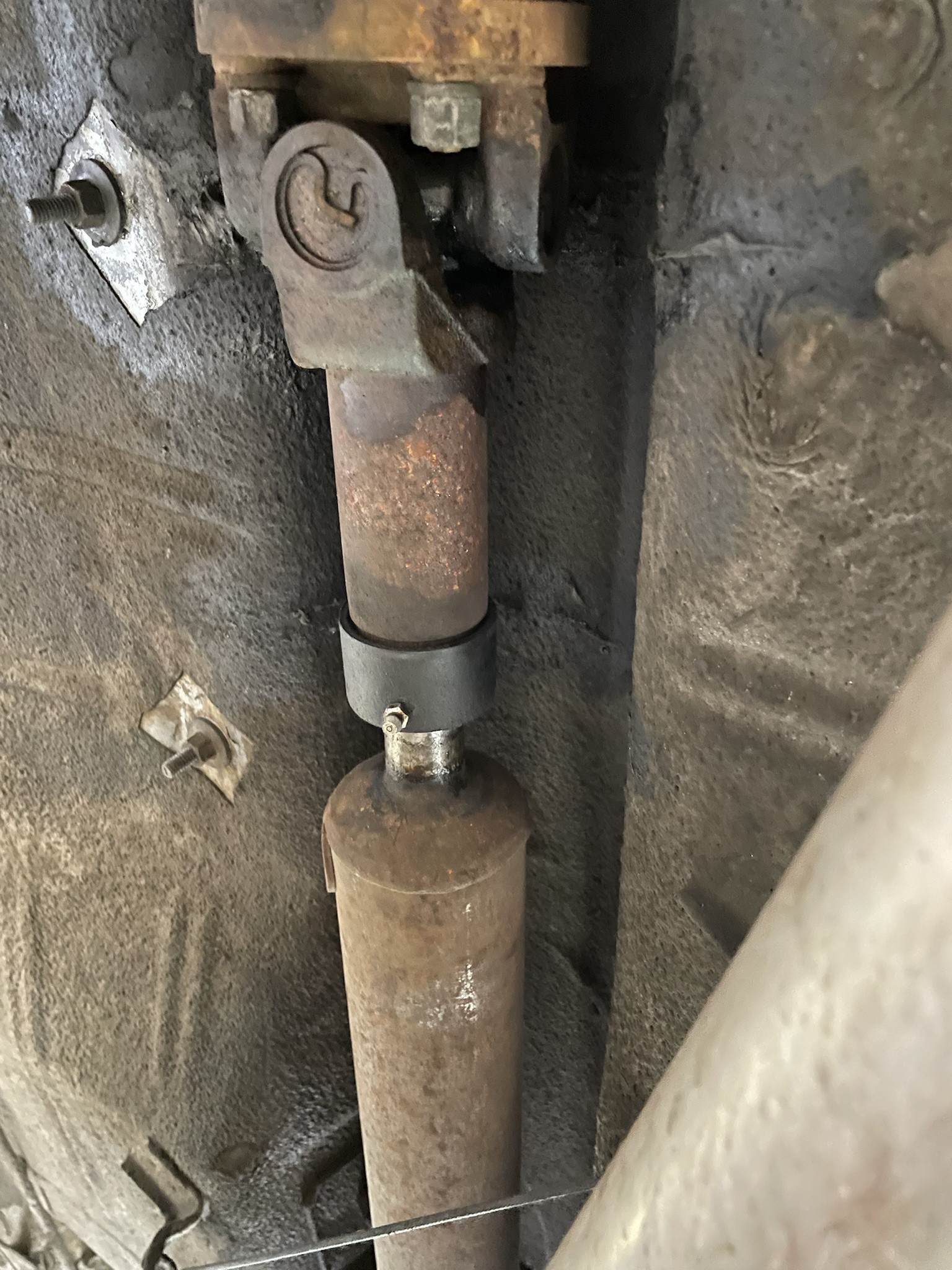
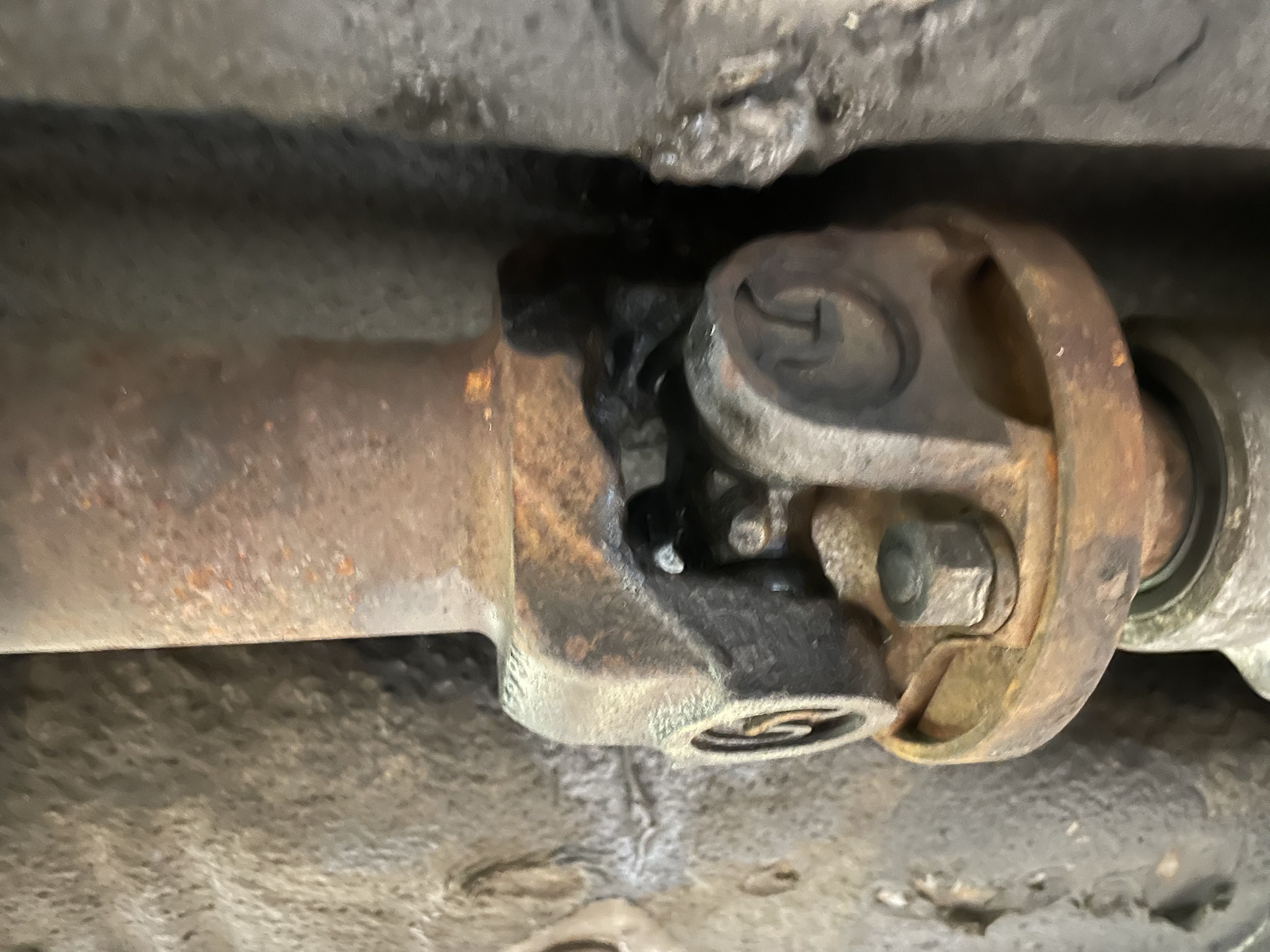
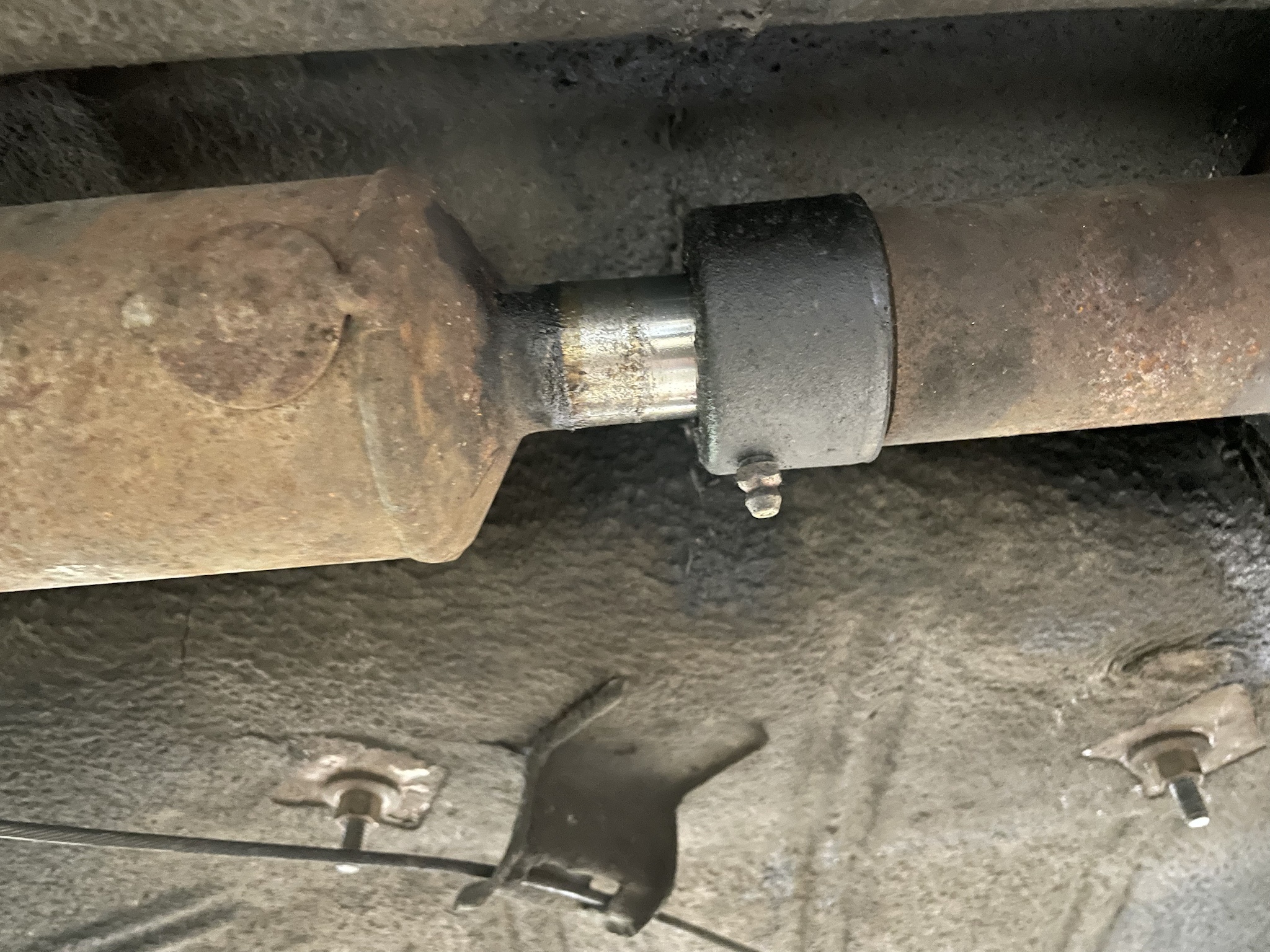
An observation: 2-piece driveshaft assys seemed to always be used on body/frame cars, which had a frame crossmember to which the center carrier bearing and such was attached to. In the case of earlier 1960s GM cars, it was probably necessary with their "X" frame frames, I suspect.
So . . . if you take the carrier bearing assy out of the mix on your Imperial, will the driveshaft have unimpeded upward motion capabilities at the rear of the frame/body, toward the rear seat area? Not to forget about the area where the bearing assy was mounted.
Might need to get a helper and a roll of twine. Put the car on a drive-on "muffler shop" style of lift. Have the front of the twine at the horizontal centerline of the transmission output shaft and then the rear part of the twine at the location of the rear pinion snubber, adjusting upward to simulate for when the rear snubber would contact the rear floor pan as if it was "bottomed out". Then look for obstructions (other than the existing carrier bearing mount) which might be there. This might help you visualize and confirm how well a 1-piece shaft might work on your chassis configuration.
The only experiences I have had are with non-Chrysler vehicles, as to 1-piece and 2-piece driveshafts. We went through the pain of seemingly yearly carrier bearing replacements, for various reasons. The closest driveshaft shop was about 45 minutes away, back in the later 1960s. So we kept things stock and put up with the issues. We didn't know what we know now.
Just some early morning thoughts,
CBODY67