How much bar is too much bar

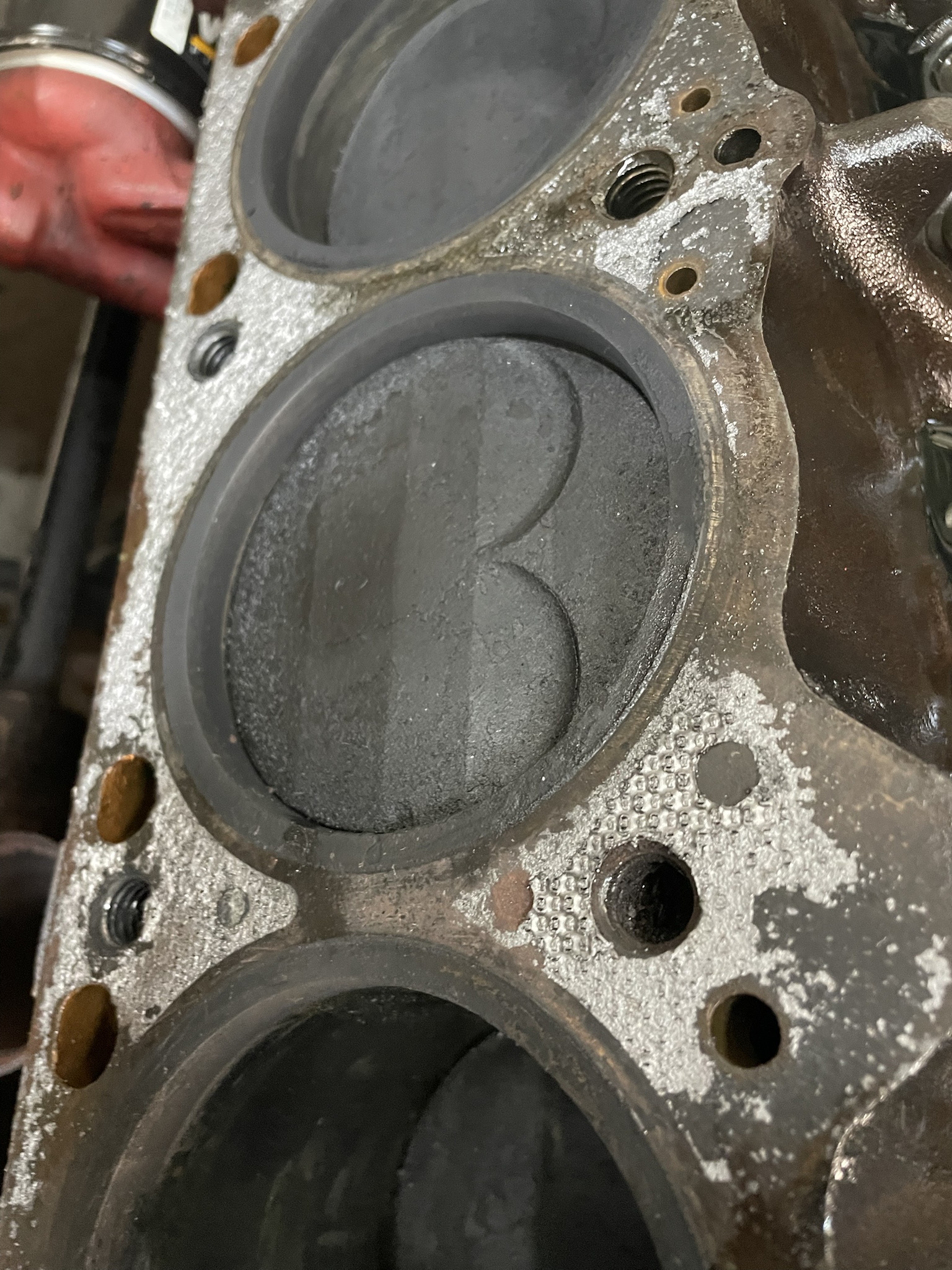
I’ve heard of the BFH/length of pipe method, I’m hoping it doesn’t come to that. I’m fairly certain that it’s just the rings, I borescoped the chambers out and there was a halfway decent amount of surface rust (no pitting.) It got parked because the PO sucked some of the fiberglass blanket down the intake, that couldn’t potentially bend a con rod could it?

I used about 4 feet of fence tubing over my 3/4" breaker bar, AFTER having liberally soaked each cylinder in penetrant and 10W mineral oil for over a week, AND cleaning off every piston surface, picking broken remnants of the topmost rings off AND polishing out the exposed surfaces of the bores with a stone cylinder hone to remove rust.

I then succeeded in breaking the crankshaft loose by GENTLY nudging my long handled breaker bar back and forth, going backward until the damper bolt in the crankshaft would begin to turn loose. Then, I would tighten the balancer bolt back down to spec, and a bit over. The pistons began to move, mm by mm at first, then, more de-rusting w the hone, more oil and penetrant, et VOILA! I got it to turn a couple afternoons after the first movement.

Expect similar requirements.
 
So you have a 30 yr old car with 7K miles. That means the mains and rod bearings will probably be low-wear items. Cam lobes will have some thin rust on them, which will be wiped off by the valve lifters' contact. The cyl walls will have a thin layer of rust on them, which will be wiped off by the rings, once everything is turning again. The timing chain set needs to be replaced as the plastic timing sprocket might have low wear, the AGE of the plastic is more important (to me). So it should be replaced soon after the motor runs again, if it is not pulled and gone through (exploratory disassembly) first. Valve guides needing oil might need some oiling help, but I suspect the spring pressure should move them?

It is my understanding that Chrysler V/RB motors were "set up tight" from the factory, for loner life. So taking things apart for a little flex-hone ckeab-up work on the cyl walls will not hurt too much nor should require boring.

I have seen some junkyard Chryslers revived and the 383s and such ran smoother than any I'd ever seen. With just fluid and coolant changes.

Keep us posted on your results!
CBODY67
 
So you have a 30 yr old car with 7K miles. That means the mains and rod bearings will probably be low-wear items. Cam lobes will have some thin rust on them, which will be wiped off by the valve lifters' contact. The cyl walls will have a thin layer of rust on them, which will be wiped off by the rings, once everything is turning again. The timing chain set needs to be replaced as the plastic timing sprocket might have low wear, the AGE of the plastic is more important (to me). So it should be replaced soon after the motor runs again, if it is not pulled and gone through (exploratory disassembly) first. Valve guides needing oil might need some oiling help, but I suspect the spring pressure should move them?

It is my understanding that Chrysler V/RB motors were "set up tight" from the factory, for loner life. So taking things apart for a little flex-hone ckeab-up work on the cyl walls will not hurt too much nor should require boring.

I have seen some junkyard Chryslers revived and the 383s and such ran smoother than any I'd ever seen. With just fluid and coolant changes.

Keep us posted on your results!
CBODY67
Thanks for the write up and the encouragement! Good group of guys here, I’ll be sure to post updates.
 
How did you fill the cyinfers? Through the spark plug holes? Then 2 or 4 of the pistons are near the top and don't have all the diameter of the rings soaked. You,can put a small screwdriver in the plug holes and feel which holes have pistons at the top. I like to put plugs back in those 2 or 4 holes and open the intake valve and fill those cylinders that way. Let is soak for days or weeks, must remove plugs and drain it out before trying to turn it.


I've seen a crank washer get bent out of shape and the bolt threads are still as new. Maybe remove the crank bolt and lube the threads first.
 
How did you fill the cyinfers? Through the spark plug holes? Then 2 or 4 of the pistons are near the top and don't have all the diameter of the rings soaked. You,can put a small screwdriver in the plug holes and feel which holes have pistons at the top. I like to put plugs back in those 2 or 4 holes and open the intake valve and fill those cylinders that way. Let is soak for days or weeks, must remove plugs and drain it out before trying to turn it.


I've seen a crank washer get bent out of shape and the bolt threads are still as new. Maybe remove the crank bolt and lube the threads first.
Yessir, through the plug holes. You’re right, two cylinders didn’t have a lot of clearance. That’s a good point though, I hadn’t even considered that.
 
Since you have the intake off then put the plugs in and fill those 2 down the intake port. Easy.
 
I've seen a crank washer get bent out of shape and the bolt threads are still as new. Maybe remove the crank bolt and lube the threads first.

If he rocks his breaker bar back & forth nice and easy, the crank bolt likely will turn loose ere the crank turns. Just as well, as folks can too easily bugger the elastomer in the damper if it's left on while attempting to get a crankshaft turning. It also might help our OP to go ahead and remove the timing chain, reducing the source of initial static friction while attempting to free the pistons and crank for turning and such. Removing the timing chain also will protect the valve train against ill effects possible from backward rotation; which sometimes is needed when freeing up rusted in pistons....
 
How will it hurt the rubber in the balancer?

Good idea taking off the timing chain, better idea is taking off the rocker arms, then all the valves are closed and they won't hit the pistons when turning it.

I like the idea of priming the oil pump, get oil in all the bearings, cannot hurt right?
 
Last edited:
I’m working on her as we speak. Rocker shafts/arms are all taken out already, most of the valves are stuck so they’re marinating in PB blaster at the moment. That being said, Christ alive this thing is stuck. 40” breaker has only succeeded in tightening the hell out of the crank bolt thus far
 
most of the valves are stuck
OK, stop the music!

If there are stuck valves, getting the engine to turn over could make things really bad. If there's a piston hitting a valve, that is probably the problem why it won't turn over. Bent valves, broken pistons etc. can occur, if they haven't already.

I'd pull the heads. You have the intake off... The most work now is to remove the exhaust manifolds and that's really not that bad. Don't forget to drain the antifreeze.
 
Heard, I will get to work on these manifolds. Would it make more sense to just let the valves marinate and keep tapping them or go straight to taking the manifolds off?
OK, stop the music!

If there are stuck valves, getting the engine to turn over could make things really bad. If there's a piston hitting a valve, that is probably the problem why it won't turn over. Bent valves, broken pistons etc. can occur, if they haven't already.

I'd pull the heads. You have the intake off... The most work now is to remove the exhaust manifolds and that's really not that bad. Don't forget to drain the antifreeze.
 
Here’s a couple glamour shots to keep me motivated LOL

IMG_8796.jpeg


IMG_8798.jpeg
 
OK, stop the music!

If there are stuck valves, getting the engine to turn over could make things really bad. If there's a piston hitting a valve, that is probably the problem why it won't turn over. Bent valves, broken pistons etc. can occur, if they haven't already.

I'd pull the heads. You have the intake off... The most work now is to remove the exhaust manifolds and that's really not that bad. Don't forget to drain the antifreeze.
Agree, if some valves are stuck open, pull the heads to get a better idea of how much rust you're working with. If the valves hadn't been stuck, and it was just some stuck rings, I had better luck popping things loose by using a pry bar in the starter hole to lever on the ring gear back and forth. Another good soaking agent in the cylinders is Evaporust. Chances are, you're going to need to pull the engine apart anyway to freshen it up, so, I suppose trying to get it unstuck will just help you unbolt the flex plate and pull the engine?
 
mix the
Dump the cylinders full of Marvel Mystery Oil and let it sit for a week or so .
Put a breaker bar on it and work it back and forth .
If you can get it to move at all , it will free up .
If not , another member mentioned a block of wood and BFH .
Good luck .
Marvel Mystery oil 50/50 with acetone.
The acetone will act as a wicking agent and help the Marvel Mystery Oil penetrate further.
 
Alright it’s decided, I’ll yank the heads. I can only currently work on it once a week as it’s stored in a buddies garage an hour from my house, but I’m hopefully moving it to my garage next weekend. I’ll update everyone asap
 
To add, would y’all still recommend trying to get it to turn over after the heads are pulled? Have the heads done over? Where would y’all go from here? This is my first go of a revival so this is all new to me!
 
To add, would y’all still recommend trying to get it to turn over after the heads are pulled? Have the heads done over? Where would y’all go from here? This is my first go of a revival so this is all new to me!
Try it. Nothing to lose and it would not surprise me if it did turn over.

If it were me, I'd take a long look at the cylinder walls and see what shape they are in. Since it's got some stuck valves, the heads would go to the machind shop for a valve job. If the cylinder walls look good, bolt it all back together. If they look bad, time to pull it apart and rebuild the engine.
 
Try it. Nothing to lose and it would not surprise me if it did turn over.

If it were me, I'd take a long look at the cylinder walls and see what shape they are in. Since it's got some stuck valves, the heads would go to the machind shop for a valve job. If the cylinder walls look good, bolt it all back together. If they look bad, time to pull it apart and rebuild the engine.
I can handle this. Hopefully a valve job and a hone is all it needs
 
I can handle this. Hopefully a valve job and a hone is all it needs
First thing you'll see when you take the heads off is the ring ridge. If this engine really is as low mileage as claimed, the ridge won't be bad. Don't bother with a ridge reamer... You can do more damage than good.

This is a 273 I pulled a head off of today. Note the ring ridge at the top of the cylinder.

IGAmvNw.jpg


If you think the bore is good, I'd suggest using a Brush Research "Flex-Hone" rather than a cheap spring hone. That will follow the existing bore and really just put a new cross hatch on the cylinder without the material removal a spring hone or a rigid hone would do.
 
First thing you'll see when you take the heads off is the ring ridge. If this engine really is as low mileage as claimed, the ridge won't be bad. Don't bother with a ridge reamer... You can do more damage than good.

This is a 273 I pulled a head off of today. Note the ring ridge at the top of the cylinder.

IGAmvNw.jpg


If you think the bore is good, I'd suggest using a Brush Research "Flex-Hone" rather than a cheap spring hone. That will follow the existing bore and really just put a new cross hatch on the cylinder without the material removal a spring hone or a rigid hone would do.
I was very skeptical of the 7k miles but the body is very straight, the manifolds are rust free, the pedals/carpet have 0 wear, etc etc.

Funny you should mention the flex hone, I actually have one on order just in case!
 
Back
Top