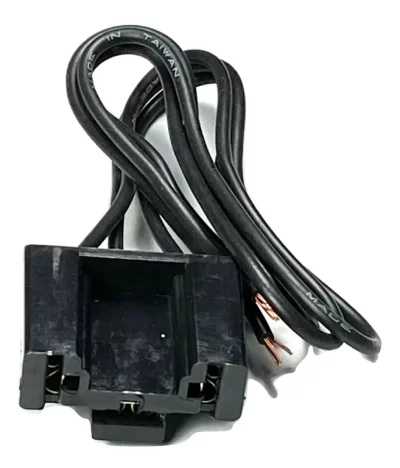
Electric Connector Body Info / Source Needed; 3 Terminal Female Body

Fury1969WI

Active Member
Joined
Apr 17, 2014
Messages
211
Reaction score
115
Location
Wisconsin
Looking for these terminal/connector bodies for resistor switch and vacuum switch as mine are melted. They seem close to the connection to the floor mounted high beam switch. I was certain someone on here recently put a name to these things but i can't find it. Been chasing my tail on eBay, Amazon, and other electric supplies like Mouser. Even tried looking up Rhode Island wiring based on other historic posts but seem they went out of business last fall (Rhode Island Wiring Service, Inc. | West Kingston RI )

20260118_140638.jpg


20260118_140651.jpg
 

Attachments

  • 3 terminal packard connector.webp
    3 terminal packard connector.webp
    31.4 KB · Views: 8
Pretty sure I can help you with the dimmer switch connector. Maybe the other too I would have to check some old harnesses. Where are you located?
 
I have the dimmer switch connector - i was trying to say the heater connections were "like" the dimmer switch ... maybe they are the same but they seem a little narrow. That could be because both of my heater switch/resistor switch bodies are half melted.

Anyway - I'm in Verona
 
I'm pretty sure they are different as you figured. I will check my stash and get back to you. Is that all you need is that black connector or do you need some wire with it?
 
Well I have one in my hand that is probably correct. Its a 67 harness so I believe it might be the resistor end. But I can check as I have the same switch as yours to check against. When I get a chance I can look through my extensive old connector connection and see if I can match it up. I would be crimping new connectors on your wires - no splicing. If you don't have the capability then ship it to me and I will do it for you. I have everything to do it correctly.
 
I chopped this one off of a 68 Charger harness I have. It looks like it got a little warm but should be OK.
Thanks for sending this. That connector body is a little better than what i have currently (no pun intended) on the harness ... i might search around a bit for something better. It is a big plus to have a decent pigtail to work with -that's looks to be from the resistor end I think.

Also, looks like some of these red and others black. Right now there is a read body up at the vacuum switch and a black one at the resistor.
 
You probably should look into your blower motor condition. If you have melted wires and connectors, normally it is due to the motor drawing high current because it is struggling to run at high speed. They get dirty and dried out from the 50 + years of activity and non activity. I have taken a couple of mine apart, cleaned them up and put a couple drops of clock oil on the bushings. I noticed a big difference in the blower speeds.
 
You probably should look into your blower motor condition. If you have melted wires and connectors, normally it is due to the motor drawing high current because it is struggling to run at high speed. They get dirty and dried out from the 50 + years of activity and non activity. I have taken a couple of mine apart, cleaned them up and put a couple drops of clock oil on the bushings. I noticed a big difference in the blower speeds.

Thanks for this. I took it apart and put new brushes in it years ago. I think this damage to wiring was from prior instances.

However! I was just trying to do an Amp draw test on the motor since i don't seem to get anything at from the "Low" fan switch setting. I put my gauge/tester in series with the connector but get no reading on DC Amps setting. I'm guessing this means that the motor wants more than my tester's 10A capacity (?).

I was looking for specs on what that blower motor should draw and i think vaguely it should be something along the order of 3-5 Amps (maybe a good bit more at initial start-up).

So, while off topic i'm thinking i either need to get a better DC Amp measurement tool (looks like about $80 (Klein Tools CL390 - Home Depot) or just buy a new fan for about $50 +shipping (FOUR SEASONS 35563 - Rockauto (for 69 Fury with factory AC)).

I have learned the hard way that throwing parts at something without confirming they are bad just introduces new variables. I guess i'm getting a measurement tool (and probably a new blower motor! :) )
 
Thanks for this. I took it apart and put new brushes in it years ago. I think this damage to wiring was from prior instances.

However! I was just trying to do an Amp draw test on the motor since i don't seem to get anything at from the "Low" fan switch setting. I put my gauge/tester in series with the connector but get no reading on DC Amps setting. I'm guessing this means that the motor wants more than my tester's 10A capacity (?).

You likely have an "infinite resistance" in that circuit then. Look for something burnt out. Does your tester use a breaker to save it from overcurrent?

I was looking for specs on what that blower motor should draw and i think vaguely it should be something along the order of 3-5 Amps (maybe a good bit more at initial start-up).

So, while off topic i'm thinking i either need to get a better DC Amp measurement tool (looks like about $80 (Klein Tools CL390 - Home Depot) or just buy a new fan for about $50 +shipping (FOUR SEASONS 35563 - Rockauto (for 69 Fury with factory AC)).

Get the new motor, but SAVE the OLD one. It likely can be cleaned up, and repaired. You can EASILY MAKE a crude amp gauge. Just use some slo-blow fuses in a harness to your problem motor. When you stop popping the fuse, note the ampacity. If the motor should start smoking at that point, then you will know where your problem truly is too.

I have learned the hard way that throwing parts at something without confirming they are bad just introduces new variables.

VERY VERY TRUE AND BE ADVISED OF IT!

I guess i'm getting a measurement tool (and probably a new blower motor! :) )

Save your $ on the ammeter unless you REALLY NEED ONE FOR A LOT MORE THAN THIS JOB. It doesn't do you that much good knowing precisely how much current your motors are pulling, old or new. You can EASILY measure VOLTAGE DROP and estimate the load current if you simply MUST know. I dig curiosity and good data, sure, but RELEVANT RESULTS I like better.

Best Luck 2 ya!
 
Back
Top