(160*F thermostat in Ohio? OEM was 196*F, but 180*F works well, too.)
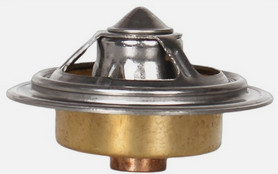
The one on the left is what Chrysler used up until about the earlier 1970s. Back then, the company that built it was Robert Shaw. If you read their information on how and why that design can work better, you'll realize it is a better basic design. But, Robert Shaw stopped building those thermostats by about 1975. Now, I think Mr. Gasket sells them at increased prices?
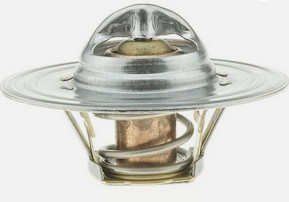
The one on the right is not "modern" at all! That design was around back when the Robert Shaw items were used by Chrysler. It is just that that is what everybody (including GM and others) used, then as now. Obviously cost less to produce, too (which is why GM used it). I would term this style "generic".
In some engines, with the "other" style, the temp gauges can indicate "overshoot" (where the temp goes past the opening point, it opens, and then the temp goes down to its normal amount. To minimize this, some techs would drill a small hole in the "flap" to bleed coolant past the valve to prevent this. Sometimes, with a "jiggle pin" in the hole, too. I think Stant and a few others offer a "HD" version, too, which is supposed to be better, butr they all look the same, as the "HD" version costs more. Possibly a marketing issue to make more money? Who knows?
At THIS point in time, to me, the Robert Shaw-style thermostat is still the best design, but is now close to $25.00USD in price. Not sure how much the other one is now, so check the catalogs at Rock Auto for pricing. I heard manufacturing of this style of thermostat went "off-shore", so quality and reliability is probably not as good as it was 50 years ago. The "other" style has probably been off-shore for that long, too, just we might not have known it. "Buy the brand" can be the best option, with Stant being one of the oldest brands of thermostats in existence. Getting one in an OEM brand might work too.
"Off-shore" manufacturers CAN build decent parts. Afterall, the OEMs have plants there to build cars for the Chinese marketplace as well as "the world". The parts that come from there CAN be good, but will be what their USA or Euro customers desire to pay for, to hit a certain price point. GM is a big player in the Chinese vehicle market, who used to build some vehicles there for export to the USA, until about a year ago.
"Crap shoot"? Very probably. Consider getting something that you can get easily-warrantied, if need be, LOCALLY and save your purchase receipt (in a totally safe and cool place)!
When buying coolant, get the one (now marked) marked "CONCENTRATE" as that is what used to be "normal" when the cars were built. The 50/50 premix might sound good, BUT consider that about 1/2 of the cooling system's capacity is in the engine block. If you use clear water to flush the system, when the radiator stops draining, using the 50/50 premix, combined with the water in the block, will further DILUTE that 50/50 mix. Hence, LESS freeze protection!
The desired -20*F coolant protection is quoted for a 50-50 mix of antifreeze and water (hopefully distilled water). In our factory a/c Chrysler products with the 26" radiator, I could coax another quart of coolant in (total of 9 quarts of antifreeze) into the OEM radiator, for a total of -34*F protection. Some of the newer aluminum tupes can take less, which makes using the "Concentrate" more important. The cars came with the "old" green coolant in them, so that should be plenty good to use now.
Sorry for the length. Shop wisely, what works for you.
Just some thoughts, experiences, and observations,
CBODY67