Refurbish time

Do you think that defective lifter you had a problem with finally let go and maybe the valve isn't closing?

 
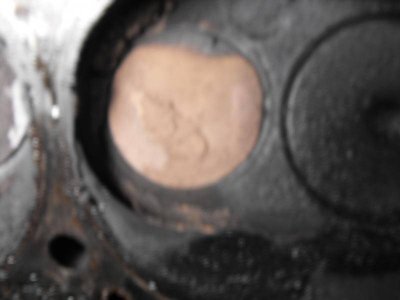
I just did a head change last week.....car ran decent but had a miss/rough idle. Here's what the valves looked like. Installed fresh "452" heads. DSCF5525.jpgDSCF5521.jpg

DSCF5525.jpg


DSCF5521.jpg
 
Do you think that defective lifter you had a problem with finally let go and maybe the valve isn't closing?
Nah. I replaced that lifter and the rest with all brand new ones about year and a half ago. The cam was still fairly new at that time and unscathed so I got lucky that time.
 
Well, I'm very glad to hear I don't need air tools. I was thinking head bolts and what have you were not easily coming back out being they've been torqued in place by the factory forever. I think I'm pretty set with snagging up a set of Chrysler heads from Indy. No one I hit up today at other mopar sites had anything bad about the Indy heads they've purchased in the past, either stock type or racing heads. In fact there were lots of long good comments. However, I figure just for shits and giggles I'll talk to a local shop to see what they can do just to cover the bases, see what they have to say. Honestly, I don't trust most of them for good reason...ridiculous hourly shop fees, "materials fee" (freakin rags) Why would I want to put up with that on just a pair of heads?
The valve seats. Cheap insurance. Won't hurt anything putting them in for good measure and since I do way more driving then just shining it makes sense. I'm planning on popping for those. To be con't.
 
I would definitely stay away from the aerohead guy. They use guide liners ie bronze wall guides. That is the fast and cheap method and can't handle any stress. You should find a shop that uses actual valve guides (called false guides). I don't know of any decent head manufacturer that uses guide liners in their heads. Guide liners slip in and are swedged in and real guides are pressed in with .002 interference on iron heads.
 
Interesting. What year was this engine supposed to be again? Those heads are not '70 pieces.
They need significant repair but I'd have a local shop do them for you. I disagree witha couple things too - I do use bronze liners with great success, even on race engines. And I would install hardened seats given the history these heads have, and the shape they're in.
 
Bronze guides are the way to go they can be run tight and not gall the stem. I think he may be talking about knurelling, not sure of spelling but where they would cut the guide to leave ridges to tighten clearances, good for a quickly to sell.
 
I think he had it right - they are just guide liners. Knurling is a totally different process and really isn't a repair. They're more of a crutch. The liners are a press fit but the main part of the iron guide is left intact. Basically - it's cheaper and faster but once installed the insert has to be finish honed to the right ID. If the replacement is done using older technology, or the liner is too thin the liners can fail. My impression is that's what he had happen. I never had that happen. The stem to guide clearance is reset to that of full bronze guides - read that as tighter.
 
I've been an auto machinist all my life and have seen hundreds of failed liners. The best way to do it right is to eliminate all possible problems. I was absolutely floored when Mike Sullivan told me they were using guide liners in their race engines back in the ninety's. He learned the hard way. Guide liners work just like cast rings work. Why not spend a couple bucks more and get something bullet proof like real guides and moly rings. Actually knurling guides is an OK idea so long as the guide isn't worn out. Most valve guide mfgs. offer knurled guides for replacement and Oldsmobile knurled the guides on all their engines from the sixties through the eighties. Typically Olds guides were always in good shape. This is what happens when you have a machine shop owner join your forum.:oops: Just my 2 cents.
 
I've been an auto machinist all my life and have seen hundreds of failed liners. The best way to do it right is to eliminate all possible problems. I was absolutely floored when Mike Sullivan told me they were using guide liners in their race engines back in the ninety's. He learned the hard way. Guide liners work just like cast rings work. Why not spend a couple bucks more and get something bullet proof like real guides and moly rings. Actually knurling guides is an OK idea so long as the guide isn't worn out. Most valve guide mfgs. offer knurled guides for replacement and Oldsmobile knurled the guides on all their engines from the sixties through the eighties. Typically Olds guides were always in good shape. This is what happens when you have a machine shop owner join your forum.:oops: Just my 2 cents.

Glad to have someone that actually knows what works.

It has been my understanding that knurled guides were OK, as long as there wasn't excessive wear. You just confirmed that, thank you. I didn't know that Olds knurled their guides though. Interesting..... I would suppose that allows a bit of oil around the valve stem.

A long time ago, I had some heads done and the guides were repaired with a threaded insert like a helicoil and then they were honed to size. Is that still done?
 
I had a set of ford heads guides knurled it ran better but mostly due to new pistons with the ring lands still on them and not saying the knurling was done right.
 
Tests

If you haven't already done so, I would pull off the valve covers and have someone turn the crank at the harmonic balancer bolt while you watch the valves at cylinder number 4. If the push rods and rockers are in place but one of the valves doesn't move, you've wiped a cam lobe. In that case, you could replace/rebuild heads forever and never solve your problem.

in addition, I'd pull the cap off the distributor and have the same helper turn the crank clockwise until the rotor starts to move. Then have him turn counterclockwise. Ideally, the rotor should move in the opposite direction within 5 degrees of motion of the breaker bar on the socket on the harmonic balancer bolt. A rule of thumb is that 15 degrees is around 4 inches at the end of a 16" breaker bar. Definitely the rotor should move within 15 degrees of starting to turn counter clockwise. If not, timing chain is shot.

in my opinion, you should also run a motor flush, because your compression problems seem grouped at the center of the engine. Maybe a clogged oil passage there is causing your problem
 
When you did the wet test was it only one the one cyl? I would test the others also. I am betting on a bunch of bad valves. If you have air tools use them if not hand tools work just as good. I use air tools day in and day out on engines without any issues. Good luck and keep us posted
 
I stick by what I said - perceived personal attack aside. I've never had a single failed liner but I've only been using them since the 90s in everything from passenger cars to marine diesels. I have witnessed full bronze guides fail too - but let's be honest here - installation and clearance issues are not the guides' fault - it's the machinist's. Some people can mess up making a good peanut butter and jelly sandwich.
If a shop suggested reaming to me in 2014 - i'd grab my stuff and run from them.
 
Back
Top